
Vine Borers
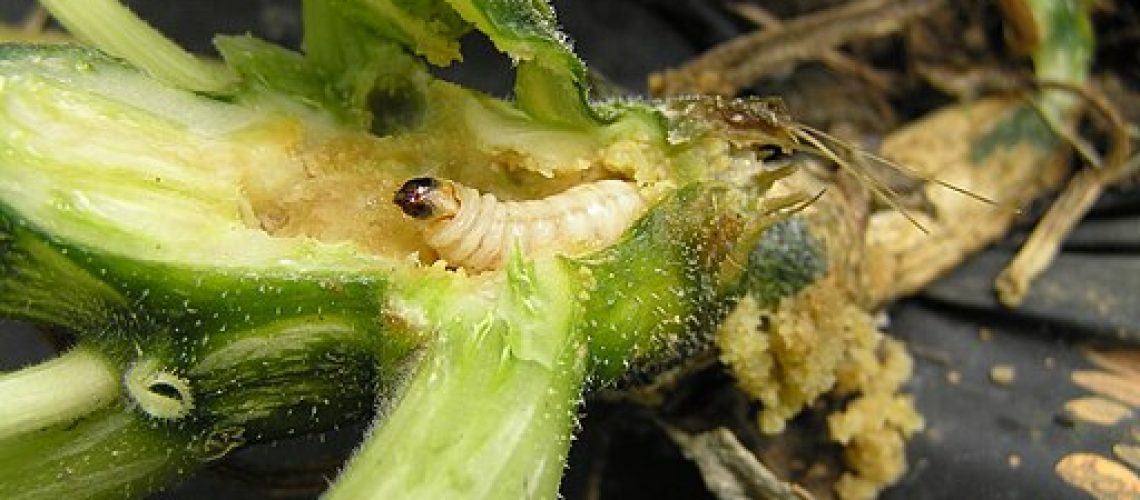
In Zone 8a, Virginia Beach, squash vine borer larvae are white to cream-colored, grub-like caterpillars with brown heads that grow to about 1 inch in length. Shortly after hatching, they bore into squash stems and begin feeding internally, disrupting the plant’s water and nutrient flow for about 4 to 6 weeks.
This feeding activity typically occurs from late June to mid-August for the first generation, and potentially from mid-August to late September if a second generation develops.
Affected plants often show wilting during the heat of the day, which may progress to full collapse if not addressed. One of the most noticeable signs of larval infestation is the presence of sawdust-like frass, ranging in color from green to orange-yellow, near the entry holes on the stem. Multiple larvae can infest the same plant, intensifying the damage.
Once feeding is complete, the larvae exit the stem and burrow 1 to 2 inches into the soil to pupate, continuing the life cycle.
Life Cycle of Vine Borers – Zone 8a
The squash vine borer affects summer squash, zucchini, pumpkins, and gourds, with a preference for zucchini, yellow squash. Its life cycle consists of four stages: egg, larva, pupa, and adult. In Virginia Beach our gardening zone is Zone 8a. The growing season is long (approximately 210–240 frost-free days), so there may be two generations per year.
Understanding their life cycle is a big step toward managing this pest to get successful crops.
Pupa (Overwintering Stage)
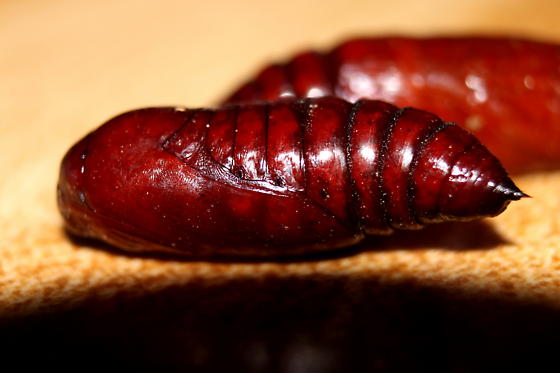 In Virginia Beach at this stage, squash vine borer larvae overwinter as pupae encased in rough-textured, dark brown cocoons buried 1 to 2 inches deep in the soil. These pupae remain dormant from late fall, typically around November, through early spring, with emergence usually occurring in mid-May when soil temperatures rise above 60°F. In milder winters, some pupae may survive closer to the soil surface. The timing of adult moth emergence aligns with local warming trends, marking the start of the pest’s active season.
Adult (Moth Stage) Late May to Mid-June
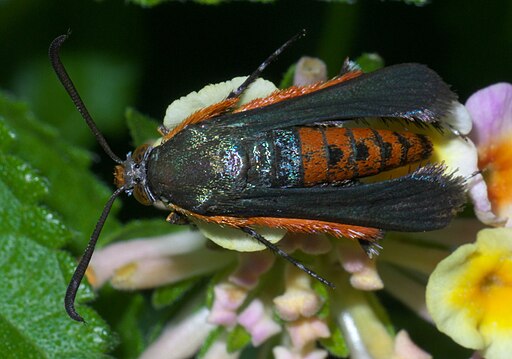
Adult squash vine borers in Zone 8a, Virginia Beach, are day-flying moths that resemble wasps, measuring about 0.5 to 0.625 inches long. They have metallic green forewings, clear hindwings, and bright orange abdomens marked with black dots. Their zigzag flight pattern and loud buzzing make them easy to spot. Adults typically emerge in mid to late May, with peak activity from early June through mid-July. In warmer years, a second generation may appear from late July to early August, allowing egg-laying to extend into September. Females begin laying eggs three to five days after emerging, usually at the base of squash stems but sometimes on petioles, vines, or leaves. Each female can lay up to 250 eggs, one at a time rather than in clusters. The adult stage lasts about two to four weeks per generation, with the first peak in egg-laying occurring between June 20 and July 15, and a potential second peak between August 1 and 15.
Egg Stage 7-10 Days
In this stage, squash vine borer eggs are tiny, measuring about 1/25 of an inch, and are flat, oval, and reddish-brown. Females lay them singly on plant stems near the soil line or occasionally on petioles. The first generation lays eggs from mid-June to mid-July, with a potential second generation laying from late July through early Septembe. Eggs typically hatch within 7 to 10 days, with faster development in warm summer temperatures around 75 to 85°F. Because of their small size and scattered placement, these eggs are difficult to detect early, making monitoring and timely intervention challenging.
Larval Stage (Destructive Stage) 3-4 Weeks of Feeding
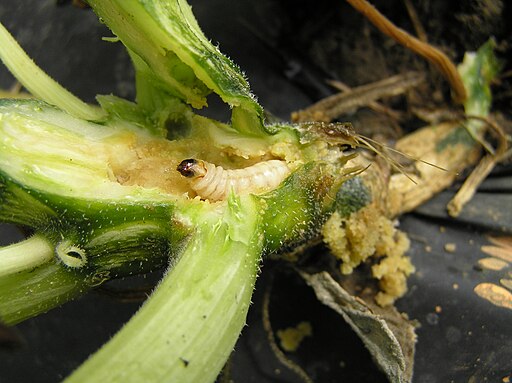
In this stage, squash vine borer larvae are white to cream-colored, grub-like caterpillars with brown heads that grow to about 1 inch in length. Shortly after hatching, they bore into squash stems and begin feeding internally, disrupting the plant’s water and nutrient flow for about 4 to 6 weeks. This feeding activity typically occurs from late June to mid-August for the first generation, and potentially from mid-August to late September if a second generation develops. Affected plants often show wilting during the heat of the day, which may progress to full collapse if not addressed. One of the most noticeable signs of larval infestation is the presence of sawdust-like frass, ranging in color from green to orange-yellow, near the entry holes on the stem. Multiple larvae can infest the same plant, intensifying the damage. Once feeding is complete, the larvae exit the stem and burrow 1 to 2 inches into the soil to pupate, continuing the life cycle.
Organic Prevention and Control Strategies
You can stop the squash vine borer without chemicals, but it requires planning, vigilance, and timing. Here are tested, organic strategies:
Physical Barriers
- Row Covers: Install floating row covers in late May and again in late July before each adult moth wave. Remove covers during flowering for pollination.
- Stem Wraps: Wrap the base of each squash stem with foil or nylon to prevent egg-laying.
Succession Planting
Succession planting is a low-effort, high-reward tactic for organic pest control.
First Planting: Late April
- Harvest before mid-June, when first-generation vine borers emerge.
- Early maturing varieties like zucchini and crookneck squash
Second Planting: Mid-June
- Mature during or right after first borer cycle ends, and possibly avoid second generation altogether.
- Summer squash and fast-growing pumpkins.
- Use row covers early to delay exposure to second-generation moths.
Third Planting: Early August
- Mature after second-generation borers have pupated.
- Fast-maturing varieties (zucchini).
Soil Disruption
- Late Fall and Early Spring – Till/disturb soil to expose overwintering pupae to predators and freezing temperatures.
Monitoring and Manual Intervention
- Check stems daily for reddish-brown eggs.
- If you see frass (sawdust-like waste) and wilting, slit the stem lengthwise with a clean knife, remove the borer, and bury the stem with compost to encourage new rooting.
Biological Aids
- Introduce beneficial nematodes in spring and again in midsummer to target larvae in soil.
- BT (Bacillus thuringiensis) – This can help if applied to stems right before larvae enter. Need to apply 5–7 days after first moth activity. It only works on newly hatched larvae.
Companion Planting / Insectary Plants
- Dill, alyssum, or yarrow can attract parasitic wasps that will lay their eggs in the borer eggs or larvae, killing the life cycle.
Additional Resource: Change in mulching guidelines for squash pests